Word of the day

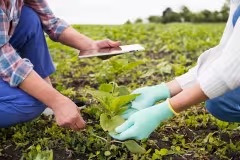
farmers

Agricultural Knowledge and Innovation System (AKIS)

The combined organisation and knowledge flows between individuals, organisations, and institutions who use and produce knowledge for agriculture and interrelated fields and strengthen links between research and practice.

Image:
magnific.com
Food loss

Food loss

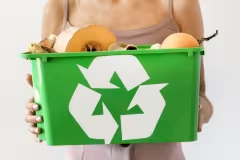
Food loss is the decrease in the quantity or quality of food resulting from decisions and actions by food suppliers in the chain, excluding retailers, food service providers and consumers.

Image:
magnific.com
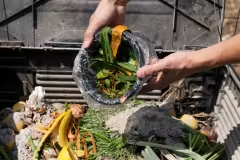
food waste

Food waste

Food waste is discarded food and its associated inedible parts (such as bones or fruit cores). Food waste occurs at all stages of the food supply chain, from farm to fork. However, the largest share is generated at consumption, which is a key area of focus for food waste prevention programmes.

Image:
magnific.com
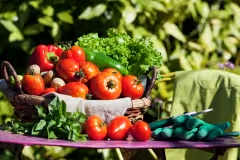
organic farming

Organic farming

Organic farming is an agricultural method that produces food using natural substances and processes with limited environmental impact, responsible use of energy and natural resources; maintenance of biodiversity; preservation of regional ecological balances; enhancement of soil fertility; maintenance of water quality.

Image:
©vwalakte, magnific.com
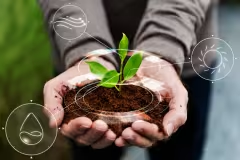
Biostimulans

Biostimulant

Biostimulants are a group of substances or microorganism of natural origin that are applied to plants or soil to improve the plant's natural nutrition, stress tolerance, and growth, reducing dependence on chemical fertilizers.

Image:
rawpixel.com
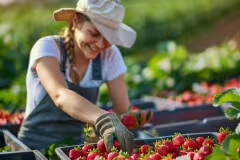
strawberry

Organic production

Organic production is an overall system of farm management and food production that combines best environmental and climate action practices, a high level of biodiversity, the preservation of natural resources and the application of high animal welfare standards. One way CAP supports it is through dedicated area-based payments.

Image:
magnific.com
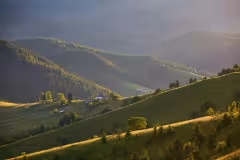
rural area

Rural area

Rural area is not the same thing in all EU states. Each one defines it with reference to its own geography and demography to target the CAP funds where they are needed most. 
BG: rural areas are municipalities where no settlement has a population of more than 15 000. That makes 215 out of 265 municipalities rural areas.
HR: the entire country territory is rural area with the exception of the four largest cities – Zagreb, Split, Rieka and Osijek. 
HU: every settlement with a population of less than 10 000 as well as agricultural areas with more than 10 000 residents living outside the urban centre.

Image:
magnific.com
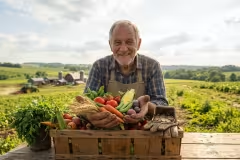
farmer

Fair income

Fair income for farmers is a fundamental goal and the number one priority of CAP. The idea is to ensure remuneration for people producing food that is adequate to their labour, investments and risks.

Image:
generated via Nano banana AI
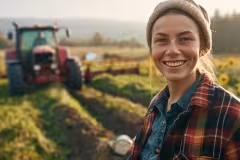
young farmer

Young farmer

In the meaning of CAP, a young farmer is a person up to 35-40 years of age (according to country) who is the head of a holding and has appropriate training and/or skills.

Image:
magnific.com