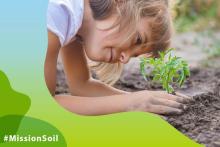

A new tool maps the state of soil health across Europe
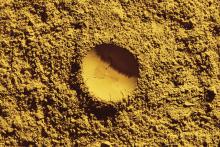
A novel soil health dashboard within the EU Soil Observatory highlights the location and estimates the extent of unhealthy soils in the EU, as well as the degradation processes behind them.
Following the success of the first edition of the first EU Organic Awards, the call for applications for the 2nd EU Organic Awards opens today until 14 May 2023. The EU organic awards acknowledge different actors along the organic value chain that have developed an innovative, sustainable and inspiring project resulting in real added-value for organic food production and consumption. The awards ceremony will take place in Brussels on 25 September 2023.
Solar Foods is a Finnish food tech startup that has created a way to produce a new, natural source of protein just out of air and electricity. What started as a research project carried out by VTT Technical Research Centre of Finland and LUT University has now grown into a successful start-up with more than 20 employees. Solar Foods has set itself an ambitious target: to revolutionise food production and help solve world hunger and the environmental problems caused by agricultural practices.
On 02.02.2023 the Commission adopted new rules which will, once applicable, lower the Maximum Residues Levels (MRLs) of two pesticides in food. Assessments by the European Food Safety Authority (EFSA) have shown that the two chemicals, belonging to the group of neonicotinoid pesticides, clothianidin and thiamethoxam, pose a high risk to bees and contribute to the global decline of pollinators. For this reason, their outdoor use has already been banned in the EU in 2018.
Are you searching for the population density, the average distance to healthcare facilities or the broadband speed in any rural area, municipality, or region in the European Union? It is now possible thanks to the newly launched rural observatory.
On 24th January, the Commission presented 'A New Deal for Pollinators' to tackle the alarming decline in wild pollinating insects in Europe, revising the 2018 EU Pollinators Initiative.
The Commission has authorized the marketing of house crickets (Acheta domesticus) as novel food in the EU. It is the third insect which has been successfully approved for consumption and follows previous authorisations given last July for the dried yellow mealworm, and in November for the migratory locust, reported eureporter.co. The house cricket will be available in its entirety, either frozen or dried, and powder.
Based on the urban–rural typology, predominantly rural regions accounted for almost half (45%) of the EU’s area in 2021. However, according to population data on 1 January 2021, only 21% of the EU population lived in rural regions. Over the period 2015-2020, the population of predominantly rural regions fell, on average, 0.1% each year, while almost no change was recorded in the population of intermediate regions. On the other hand, the population of predominantly urban regions rose, on average, 0.4% each year.